A dead battery has a way of showing up at the worst possible moment. In Phoenix, that moment often arrives in punishing heat, in a crowded parking lot, or when you are already late and running on fumes. Most drivers think of battery trouble as a winter problem, but local experience says otherwise. In the Valley, extreme heat is what quietly shortens battery life. By the time your car gives you that slow, dragging crank, the battery may already be near the end.
If you are searching for a jump start service near me after your vehicle refuses to start, a little judgment goes a long way. Some no-start situations are simple battery failures. Others look like a battery problem but turn out to be a bad alternator, loose terminal connection, parasitic drain, starter issue, or even a key fob problem on newer vehicles. Knowing the difference can save time, money, and a second roadside call later that day.
Phoenix drivers deal with a particular mix of stressors. Summer pavement temperatures can be brutal. Batteries cook under the hood. Short trips around town may not recharge the battery fully, especially if the air conditioning runs hard, phones stay plugged in, and the car sits for long stretches between errands. Add in modern electronics, remote start systems, and aging charging components, and a simple no-start call becomes less simple than it looks from the driver’s seat.
Why dead batteries are so common in Phoenix
Heat speeds up chemical reactions inside a battery, and not always in a good way. Over time, high temperatures can evaporate electrolyte, corrode internal plates, and weaken the battery’s ability to hold a charge. Drivers who moved here from colder climates are often surprised by how quickly a battery ages in Arizona. A battery that might last four or five years in milder weather may start struggling sooner in Phoenix, especially if it was a budget replacement or if the charging system has been running slightly off.
There is also a pattern that roadside technicians see all the time. The battery seems fine until the first slightly cooler morning, or until the car sits for a day or two. Then the owner turns the key and gets a click, a sluggish crank, or nothing at all. The heat did the long-term damage, but the failure often reveals itself later.
Another local factor is driving style. A lot of city driving means frequent stops, short runs, and heavy accessory use. If your commute is ten or fifteen minutes each way, and the blower motor and infotainment system are working hard the entire time, the battery may never fully recover from each start cycle. Over weeks and months, that matters.
What a true battery failure looks like
Not every no-start means you need a car jump start service. Still, there are some classic signs. The engine cranks slowly, dashboard lights dim noticeably, power locks behave weakly, or you hear a rapid clicking noise when turning the key. Interior lights may come on, but the engine still will not turn over with normal strength.
There are also misleading cases. A single loud click with full power to the dash can point to a starter issue. A car that starts with a jump but dies again within minutes may have an alternator problem, not just a drained battery. If you smell fuel, hear normal cranking speed, and the engine still does not fire, the problem might not be electrical at all.
In real roadside work, one of the most common mistakes is assuming a jump solves everything. It might get you moving, but it does not always tell you why the battery died. If you left the lights on overnight, the cause is obvious. If the battery keeps failing for no clear reason, you need to think beyond the jump.
What to do first when the car will not start
Before you call for roadside assistance Phoenix drivers should take a breath and make a quick assessment. Safety comes first, especially if the vehicle is stopped on a shoulder, in a traffic lane, or in direct sun with passengers inside.
Use this short sequence:
Move the vehicle only if it can be done safely. If you are already parked, stay put and turn on hazard lights if they still work. Try one more start attempt, no more. Repeated cranking can overheat components and drain whatever charge is left. Check for obvious causes such as lights left on, loose battery terminals, or a key fob with a weak battery on push-button start vehicles. If the engine cranks very slowly or only clicks, call a car jump start service or mobile roadside assistance provider. If the car starts with a jump, drive long enough to charge it somewhat, but arrange battery testing soon because the problem may return the same day.That sequence sounds simple, but it prevents a lot of unnecessary wear and confusion. I have seen drivers sit in a parking lot trying twenty or thirty times to restart a weak battery, then wonder why the jump takes longer or fails altogether. A battery with a small amount of life left is easier to recover than one that has been completely exhausted by repeated attempts.
When a jump start is safe, and when it is not
Most standard gasoline vehicles with a 12-volt system can be jump-started safely if the cables or jump pack are used correctly. That said, caution matters more than many drivers realize. Reverse polarity, bad cable contact, or sparks near a damaged battery can create real risk. On newer cars packed with electronics, sloppy jump-start technique can also trigger expensive problems.
If the battery case is swollen, cracked, leaking, or smells strongly of sulfur, do not attempt a jump yourself. If the terminals are heavily corroded or the vehicle was recently in a collision, step back and call emergency roadside assistance. Hybrid and electric vehicles also require more care. Even when the accessory battery is 12 volts, the overall system architecture is different, and the average driver should not guess.
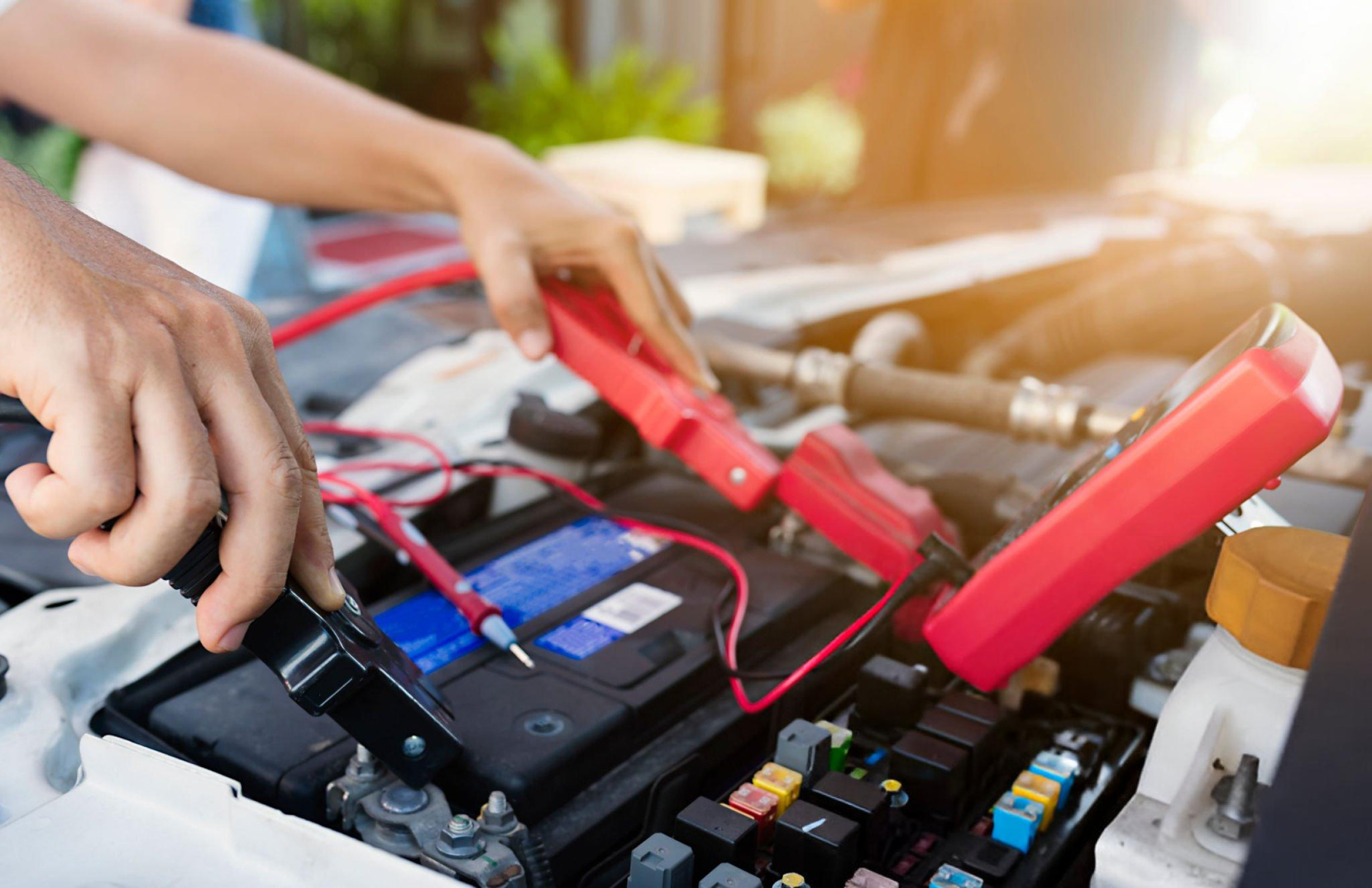
This is where professional mobile roadside assistance earns its value. A trained technician can test voltage, inspect terminal condition, and tell whether the battery is simply discharged or truly failing. They can also spot the clues of a charging problem before you get stranded a second time in a worse location.
The difference between a helpful jump and a wasted service call
A good jump start is not just about getting the engine running. It is about deciding what happens next. The smartest roadside providers do a little diagnosis on the spot. They look at battery age if visible on the label, check for corroded terminals, note whether the engine starts immediately or hesitates, and observe whether the vehicle holds voltage once running.
That matters because a jump can create false confidence. A driver gets going, stops for groceries ten minutes later, and the car is dead again in the lot. In Phoenix heat, that second breakdown can feel much worse than the first.
A practical example: if a three-year-old battery was deeply discharged because a dome light stayed on overnight, a jump may be all you need, followed by a solid drive and maybe a battery test later. But if a five-year-old battery dies after a normal workday with no lights left on, odds are higher that the battery is at the end of its service life. In that case, a jump is a temporary bridge, not a fix.
Choosing roadside help when time and heat matter
Search behavior is predictable when a vehicle dies. People pull out their phone and type roadside assistance near me or emergency roadside assistance near me. The challenge is not finding a company name. It is knowing what kind of response you need.
In Phoenix, the best roadside help is the kind that can adapt if the initial diagnosis changes. Maybe you thought you needed a jump, but the technician finds a loose cable. Maybe it turns out you need emergency fuel delivery because the gauge was inaccurate. Maybe the no-start happens because the shifter is not fully in park, or because the starter has failed and you need towing after all.
A provider that handles more than one issue can save you from stacking separate calls. That is why many drivers prefer emergency breakdown service teams that offer battery help, flat tire assistance, lockout support, and fuel delivery near me under one umbrella. One dispatch, one ETA, one technician equipped for common roadside problems.
For drivers in the Southeast Valley, the same logic applies. If you are in a residential area, school lot, or shopping center and search roadside assistance Gilbert AZ, you want a service that understands local traffic patterns, heat exposure, and the practical need to get you moving quickly without guessing.
Why the Arizona sun changes battery advice
Advice that works in cooler states does not always translate here. In Phoenix, shade can matter during service. So can the time of day. A battery that barely has enough strength to accept a jump at 7 a.m. May behave differently after hours in direct afternoon sun. Heat can increase chemical activity enough to mask weakness temporarily, then the battery fails again after sunset or the next morning.
This is one reason experienced roadside technicians avoid making bold promises based only on a successful jump. The battery may take enough current to crank once, but that says very little about reserve capacity. It is also why battery age matters more here. Once a battery gets into the later part of its life, summer often exposes every weakness.
There is another local reality. People leave more electronics running while parked because of the heat. Charging fans, dash cams, phone cables, and accessories can all contribute to parasitic drain if wiring is not ideal. Most of the time the drain is small. Combined with an aging battery, small becomes significant.
Common mistakes drivers make after a jump start
The first mistake is shutting the car off too soon. If your battery was merely drained and still healthy enough to recover, the alternator needs time to put charge back into it. A quick five-minute drive often is not enough, especially with the air conditioning blasting. Depending on the battery condition and state of discharge, you may need a longer drive or a proper battery charger later.
The second mistake is assuming the battery is now “good.” A jump is not a test result. It is an assist. If the battery is old, if the terminals are dirty, or if the car needed more than one jump recently, get it checked.
The third mistake is overlooking the actual cause. Maybe the trunk light stayed on. Maybe a door did not latch fully. Maybe a charger remained plugged into a live power outlet. If you never identify the reason, you may repeat the same problem next week.
The fourth mistake is ignoring early symptoms. Slow crank for a few mornings, flickering interior lights, and electronic glitches during startup are the car’s version of a warning note. Waiting until the battery fails completely usually means dealing with it at the least convenient place possible.
When the issue is not the battery at all
Roadside calls get mislabeled every day. Someone requests jump start service near me, convinced the battery is dead, but the technician finds a different issue. That is not unusual.
If the battery tests fine but the vehicle still will not crank, suspect the starter or the starter relay. If the car accepts a jump and then stalls shortly after, the alternator may not be charging. If there is no response at all and the steering wheel is locked on an older vehicle, the ignition switch or lock cylinder might be involved. On push-button start cars, a weak key fob battery can create confusion because the driver assumes the car battery is dead when the vehicle simply is not recognizing the key properly.
A seasoned roadside provider knows how to sort through those possibilities quickly. That is a big reason to call professional roadside assistance Phoenix services rather than relying only on a stranger in the next parking space with a set of cables and a good attitude.
The overlap between battery trouble and other roadside needs
Many breakdowns come in clusters. A driver with an aging battery may also discover a low tire after the car finally starts, or realize the fuel level was lower than expected because the vehicle sat idling with the AC on during a prior stop. It sounds unlikely until you spend enough time around roadside calls. Stress leads to missed details.
That is why broad mobile roadside assistance matters. A company that handles flat tire assistance, flat tire repair near me requests, emergency fuel delivery, and vehicle lockout service can solve the actual problem even when the first guess was wrong. I have seen drivers call for a jump and then admit, after the technician arrives, that they may also need car lockout service near me because the spare key is inside and the doors auto-locked. Real life rarely breaks down into one neat category.
Fuel issues in particular can mimic battery trouble. Some fuel gauges are optimistic, especially on older vehicles parked at an angle. A car may crank weakly because the battery is marginal, yet the deeper reason it never starts is lack of fuel. Having access to fuel delivery near me or emergency fuel delivery can turn a frustrating two-problem scenario into one completed service visit.
How to reduce the odds of another dead battery
Most battery failures give at least a little warning. The trick is paying attention before you are stuck in a lot at 4 p.m. In August.
Keep these habits in mind:
Replace aging batteries proactively, especially if yours is nearing the end of its expected life in Arizona heat. Clean terminal corrosion and make sure cable connections are tight. Drive long enough, often enough, to let the charging system recover from repeated starts. Unplug unnecessary accessories and investigate any suspected parasitic drain. Test the battery and charging system at the first sign of slow cranking.Those five habits are not flashy, but they prevent a lot of roadside calls. The best time to think about battery condition is when the car still starts normally.
What to keep in your vehicle in case the battery dies
You do not need to turn your trunk into a rolling repair shop. A few sensible items make a breakdown easier to manage. In Phoenix, water matters more than people think. If you are stranded safely in a parking lot and waiting for roadside assistance Gilbert AZ or roadside assistance Phoenix support, hydration and shade become part of the response. A phone charger is equally important, especially if battery trouble happens after a long day and your phone is low.
A compact jump pack can help if you know how to use it and your vehicle is a good candidate for one. Still, it is not a substitute for judgment. On a straightforward dead battery, a jump pack is excellent. On a damaged battery, an uncertain electrical issue, or a vehicle with hard-to-access jump points, it is better to call a professional.
It also helps to know your battery’s age before it fails. The date sticker is easy to ignore until you are stuck. If the battery is already well into its later years, your decision-making gets simpler. You can treat a jump as temporary and plan replacement rather than hoping roadside assistance near me for another season out of it.
A realistic view of wait times and expectations
During heat waves, monsoon weather, rush hour, and holiday travel periods, roadside demand climbs. That means wait times can stretch, even for legitimate emergency roadside assistance calls. Drivers usually cope better when they know what information speeds dispatch. Exact location, vehicle make and model, whether the car is blocking traffic, whether there are children or pets inside, and what symptoms occurred when starting the vehicle all help.
If your car is in a covered garage at home, the situation is very different from being disabled on the shoulder of a major road. Good dispatchers triage accordingly. They may also advise against repeated start attempts, tell you whether to remain with the vehicle, and explain if a jump is likely or if towing should be prepared as a backup.
This is another reason to choose a capable emergency breakdown service rather than the cheapest number that pops up first. The goal is not just arrival. The goal is arriving prepared, diagnosing accurately, and reducing the chance that you will be making another call an hour later.
What experienced drivers in Phoenix learn over time
After a few summers here, most drivers stop underestimating batteries. They learn that no-start problems are often age-and-heat stories, not bad luck. They learn that a battery can seem fine right up until it is not. They learn that a successful jump is good news, but only partial news.
They also learn the value of having a trusted service saved in their phone before trouble starts. When you are already stressed, tired, and standing on hot pavement, you do not want to compare ten vague listings for car jump start service. You want a reliable mobile roadside assistance provider who can handle the common realities of Arizona driving, from battery trouble to flat tire assistance to fuel delivery and lockout calls.
A dead battery is one of the most fixable problems a driver will face. The catch is that it only stays simple when handled early and handled well. In Phoenix, where heat punishes electrical components quietly and consistently, good habits and smart roadside decisions make all the difference.
Our Sponsor
EZ3 Roadside Rescue Services
EZ3 Roadside Rescue Services is a Gilbert-based roadside assistance provider serving drivers throughout Gilbert and the greater Phoenix, Arizona area. The company provides fast, professional roadside assistance for common vehicle emergencies, including flat tire repair and tire changes, battery jump starts, emergency fuel delivery, vehicle lockout assistance, lug nut removal, battery replacement, and emergency breakdown assistance. EZ3 Roadside Rescue Services is available 24/7 to help stranded motorists get safely back on the road.
Address:
922 N Colorado St,
Gilbert,
AZ
85233,
United States
Phone: (480) 710-5902
Business Hours:
- Open 24/7 — Emergency Roadside Assistance Available
Follow Us: